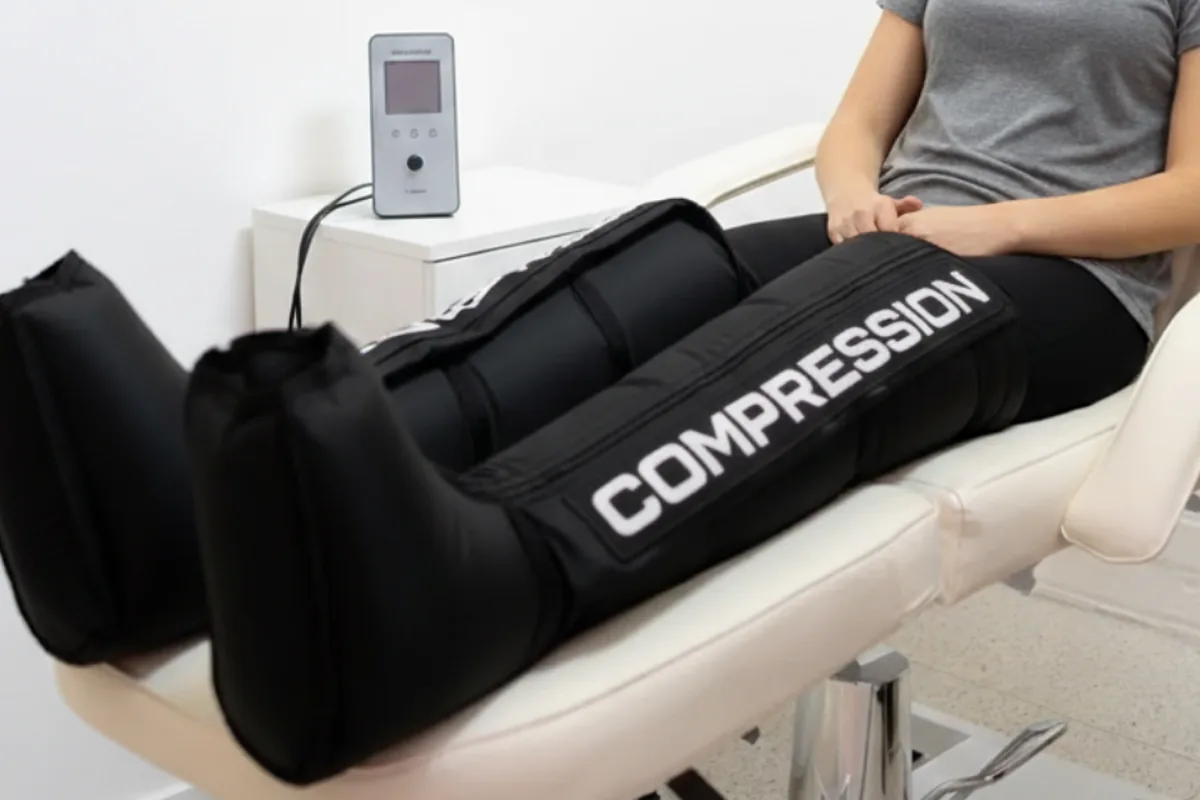
Quick answer: Passive rest doesn't actively flush metabolic waste or enhance oxygen delivery to muscles
Key Takeaways
- Passive rest doesn't actively flush metabolic waste or enhance oxygen delivery to muscles
- Medical-grade compression uses sequential pneumatic pressure for precise, controlled recovery
- Significantly reduces return-to-training time compared to rest alone
- Used by professional sports teams, Olympic athletes, and military recovery programs
- Pairs with cryotherapy for the ultimate post-competition recovery protocol
Why Rest Isn't Enough for Athletes
After intense training or competition, rest is important but passive. Your body needs active recovery tools that improve oxygen delivery, flush metabolic waste, and reduce muscle soreness faster than rest alone.
Local athletes from Greenville, Simpsonville, and Mauldin are discovering that professional compression therapy provides the active recovery boost they need to train harder and perform better. The difference between passive rest and active recovery can mean days saved in your training cycle.
Professional athletes report 30-50% faster return-to-training times when incorporating compression therapy vs passive rest alone — a significant competitive advantage.
How Compression Therapy Boosts Athletic Performance
Our medical-grade compression therapy at iCRYO Mauldin uses sequential pneumatic pressure to enhance blood flow, reduce lactic acid buildup, and accelerate muscle repair. Athletes report significantly less soreness and faster return-to-training times.
The sequential pressure pattern starts at the feet and moves upward, mimicking the body's natural venous return but with significantly more force. This creates a powerful flushing effect that removes metabolic waste products and delivers fresh, oxygenated blood to recovering tissues.
- Sequential pressure flushes lactic acid and metabolic waste
- Enhanced oxygen delivery accelerates muscle repair
- Reduces post-competition swelling and inflammation
- Improves flexibility and range of motion between sessions
- Prevents overtraining syndrome through faster recovery
The Athletic Recovery Stack
Combine compression therapy with cryotherapy for inflammation reduction and infrared sauna for deep tissue relaxation — creating the ultimate recovery stack trusted by professional athletes nationwide.
Many of our athletic clients at iCRYO Mauldin follow a specific recovery protocol: cryotherapy first (3 minutes) to rapidly reduce inflammation, then compression therapy (30 minutes) to flush waste and improve circulation, followed by infrared sauna (30 minutes) for deep muscle relaxation.
Train Harder, Recover Smarter
Whether you're a competitive athlete, weekend warrior, or fitness enthusiast in the Upstate SC area, professional compression therapy helps you get back to what you love faster.
Visit iCRYO Mauldin at 100 N Main St STE. B, Mauldin, SC 29662 or call (864) 478-7429 to schedule your recovery session.