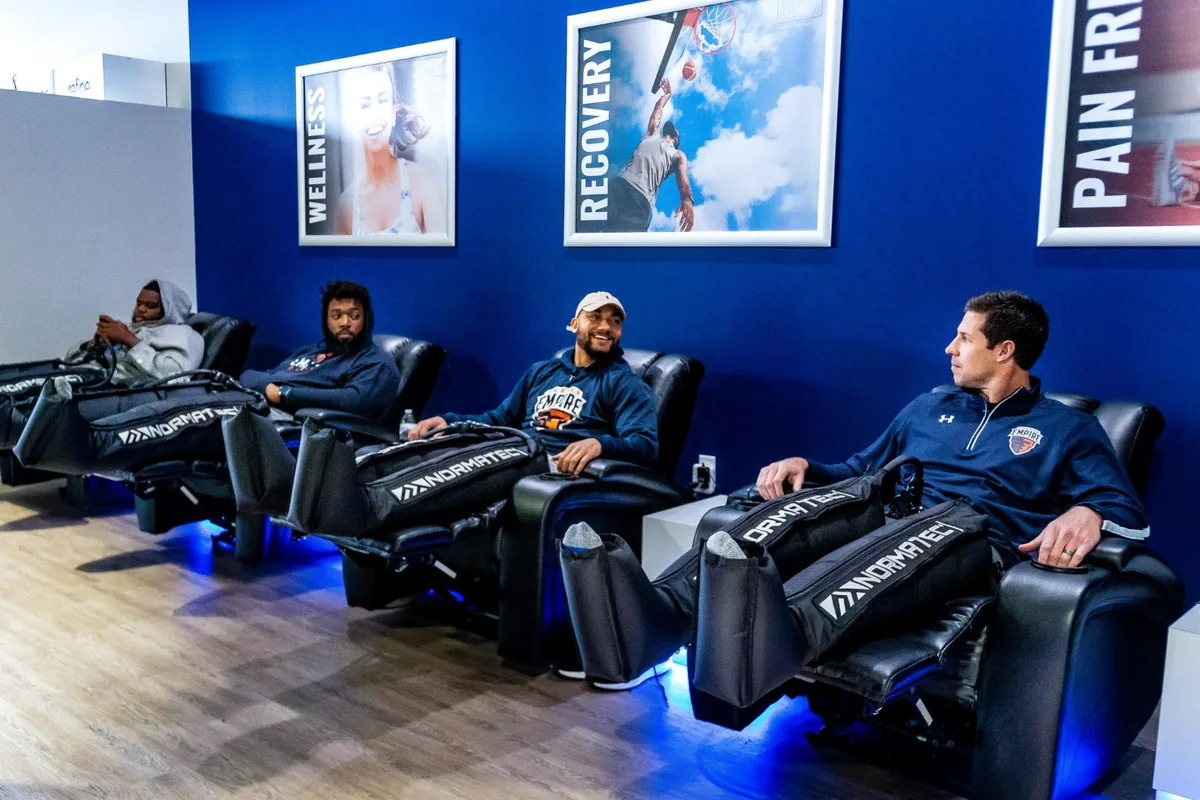
Quick answer: Foam rolling provides localized myofascial release — compression therapy delivers systemic circulatory recovery
Key Takeaways
- Foam rolling provides localized myofascial release — compression therapy delivers systemic circulatory recovery
- Foam rolling requires effort and technique; compression therapy is passive and professionally administered
- Compression therapy addresses circulation, lymphatic drainage, and metabolic waste removal simultaneously
- Using both together provides the most comprehensive recovery approach
- Compression treats the entire lower body in 30 minutes vs foam rolling one muscle at a time
What Foam Rolling Does Well — and Where It Falls Short
Foam rolling is a popular self-myofascial release technique that helps break up muscle adhesions and improve flexibility. It's a useful tool for targeting specific tight spots before or after workouts.
However, foam rolling is localized, time-consuming, technique-dependent, and doesn't address systemic recovery needs like circulation, lymphatic drainage, or full-body swelling reduction. For Mauldin and Greenville athletes who need comprehensive recovery, foam rolling is only part of the picture.
Foam rolling addresses one muscle group at a time, requiring 15-20 minutes to cover both legs. Compression therapy treats your entire lower body simultaneously in a single 30-minute session — while you relax.
Compression Therapy: Full-Body Recovery
Compression therapy at iCRYO Mauldin provides sequential pneumatic pressure across your entire legs, promoting systemic blood flow, lymphatic drainage, and metabolic waste removal. This full-body approach delivers faster, more complete recovery than foam rolling alone.
The sequential pressure pattern moves fluid efficiently from feet to hips, creating a comprehensive flushing effect that addresses every muscle group, joint, and tissue in the lower body simultaneously.
- Treats entire lower body simultaneously vs one muscle at a time
- Promotes systemic circulation and lymphatic drainage
- Flushes metabolic waste from all muscle groups at once
- No technique required — professionally administered for optimal results
- Passive and relaxing vs physically demanding foam rolling
The Best Approach: Use Both
Keep your foam roller for targeted muscle work — addressing specific trigger points and adhesions that need manual attention. Add professional compression therapy for the systemic recovery your body needs — circulation, lymphatic drainage, and full-body waste removal.
Combine compression therapy with cryotherapy and red light therapy for a recovery stack that addresses inflammation, circulation, and cellular repair — something no foam roller can match.
Level Up Your Recovery
Keep your foam roller for targeted muscle work, but add professional compression therapy for the systemic recovery your body needs.
Schedule your session at 100 N Main St STE. B, Mauldin, SC 29662 or call (864) 478-7429 today.