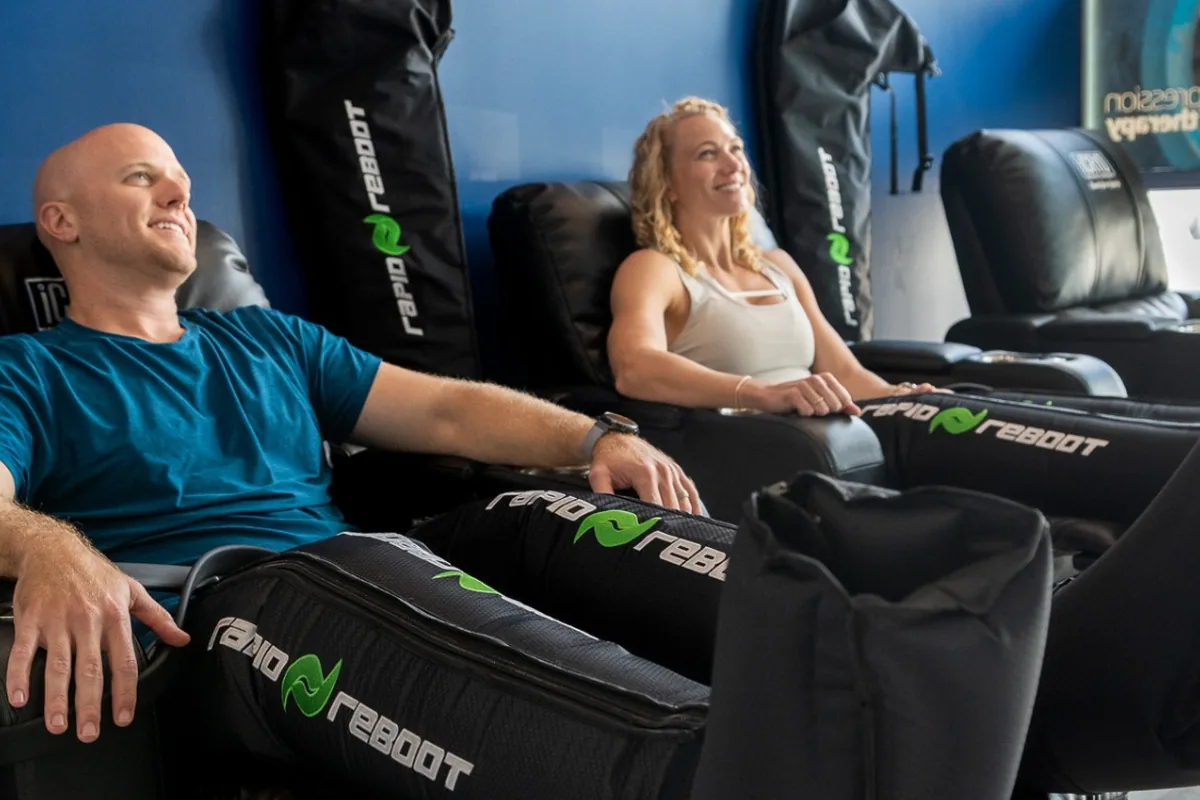
Quick answer: Massage works on individual muscle groups manually; compression treats the entire lower body simultaneously
Key Takeaways
- Massage works on individual muscle groups manually; compression treats the entire lower body simultaneously
- Compression therapy provides consistent, calibrated pressure — massage quality varies by therapist
- Compression is more time-efficient (30 min) and cost-effective than massage (60-90 min)
- Compression excels at circulation and lymphatic drainage; massage excels at soft tissue manipulation
- Combining both provides the most comprehensive recovery protocol
Why Massage Has Its Limits
Massage therapy is an excellent tool for relaxation and muscle tension relief. A skilled therapist can break up adhesions, release trigger points, and improve mobility in specific areas. However, massage is inherently limited in scope — a therapist can only work on one area at a time, sessions require 60-90 minutes, and the circulatory and lymphatic benefits are modest compared to compression therapy.
For athletes and active adults in Mauldin and Greenville seeking faster, full-body recovery, massage alone may not be enough to reduce post-workout inflammation and swelling efficiently.
A single compression therapy session treats both legs simultaneously in 30 minutes with consistent, calibrated pressure. The same coverage with massage would require 60-90 minutes and varies by therapist skill.
How Compression Therapy Accelerates Recovery
Compression therapy uses sequential, pneumatic pressure to systematically enhance circulation, reduce swelling, and accelerate lymphatic drainage throughout your entire legs simultaneously. This targeted approach delivers measurable recovery improvements that manual massage cannot replicate.
The consistency of compression therapy is a key advantage: every session delivers the same precise pressure pattern and coverage, regardless of which day you visit or who's on staff.
- Treats both legs simultaneously vs one area at a time
- Consistent, calibrated pressure every session
- Promotes systemic circulation and lymphatic drainage
- 30-minute sessions fit busy schedules
- More affordable per session through membership
When to Choose Each — and How to Combine
Choose massage when you have specific trigger points, adhesions, or tension patterns that need targeted manual attention. Choose compression therapy for systemic recovery, circulation improvement, and waste removal.
At iCRYO Mauldin, we combine compression therapy with cryotherapy and infrared sauna sessions for a full-spectrum recovery plan. Simpsonville and Greenville clients experience faster soreness reduction and improved performance with this integrated approach.
Upgrade Your Recovery Routine
While massage and compression therapy can complement each other, professional compression delivers faster, more consistent results for circulation and recovery.
Schedule your compression therapy session at 100 N Main St STE. B, Mauldin, SC 29662 or call (864) 478-7429 today.